

[Archived] Do you get a “password incorrect” error trying to set up Gmail in your email program? Find out here how to allow less secure apps for Gmail access ⤓ and configure Gmail to work with all email programs using POP or IMAP.
On This Page
How to Allow Less Secure Apps to Access Gmail (Mail, Outlook, Pegasus Mail…)
Since May 30, 2022, Gmail no longer allows “less secure” access using the account password.
Do create a Gmail app password for each email program instead.
Time needed: 5 minutes
To allow “less secure apps” to access Google so you can set up a Gmail account in email applications that do not support OAuth2 authentication:
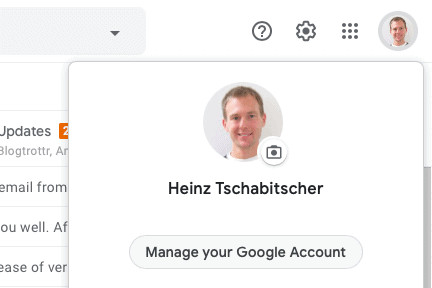
- Click your account’s avatar or initials in your Gmail’s top right corner.
- Select Manage your Google Account on the sheet that has appeared.
Shortcut: You can also open your Google Account page directly; sign in if prompted.
- Go to the Security category on the left.
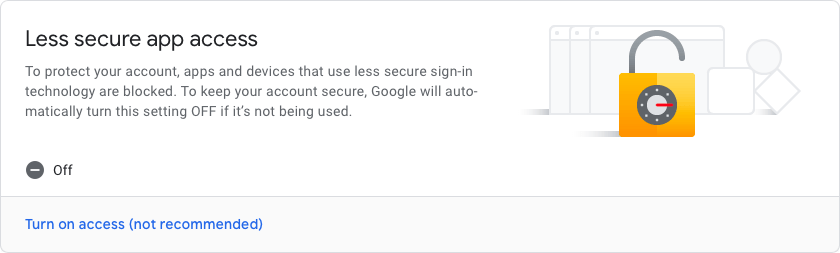
- Follow the Turn on access link under Less secure app access.
One or two: Less secure apps access does not work with 2-step authentication. With 2-step authentication enforced, do create a Gmail app password for each application instead.
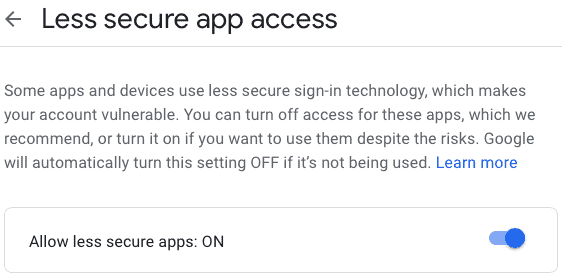
- Turn ON Allow less secure apps:.
Less secure app access off by default: It is best to allow less secure apps only when there is no alternative — and to look for an alternative, then disable access again.
Now, you can set up Gmail in most email programs using POP or IMAP; make sure
- you have enabled POP or IMAP access in Gmail,
- Gmail 2-step authentication is disabled for your Google account, and you
- use the correct Gmail POP3 settings or Gmail IMAP settings.
Access secured?
Tips help fuel these email and tech how-tos.
How to Allow Less Secure Apps for Gmail Access: FAQ
What does “less secure” mean? Am I in danger if I use such apps?
An app is less secure if it
- sends your account’s password over the internet, in the worst case unencrypted in plain text or
- stores your Gmail password locally, again without encryption in the worst case.
This makes it easier to intercept or steal your password. You are not necessarily in danger, however, just more at risk.
(Tested in Mail for macOS; first published January 2019, last updated May 2022)