

Struggling to type in multiple languages on your iPhone? A popular language learning app wants you to draft an essay in Kiswahili? Texting your pal in Finland? Find out here how to change the input language for the iPhone keyboard ⤓ (and how to add or remove languages, of course).
On This Page
How to Change the Input Language on the iPhone Keyboard
⚡ Quick Fix
Touch and hold the globe icon, then select the desired keyboard.
Time needed: 1 minute
To quickly switch between input languages (for keyboard layouts and auto-complete) on the iPhone iOS keyboard:
- Press and hold the language switching icon in the iPhone keyboard.
Where: The icon is typically to the left of the spacebar and emoji button at the very bottom.
What: The language switching icon sports a two-dimensional stylized globe with lines of longitude and latitude. - Select the desired language and keyboard layout from the menu that has appeared.
Just switch: Tap the language switching icon instead to switch to the next layout down the list, then cycle back up.
Which language: The iPhone keyboard will briefly flash the language in the Space bar.
Missing language or keyboard layout: See below for adding (or removing) languages to (and from) the list.
Talk to me: You can also change the language used for dictation on the iPhone, of course.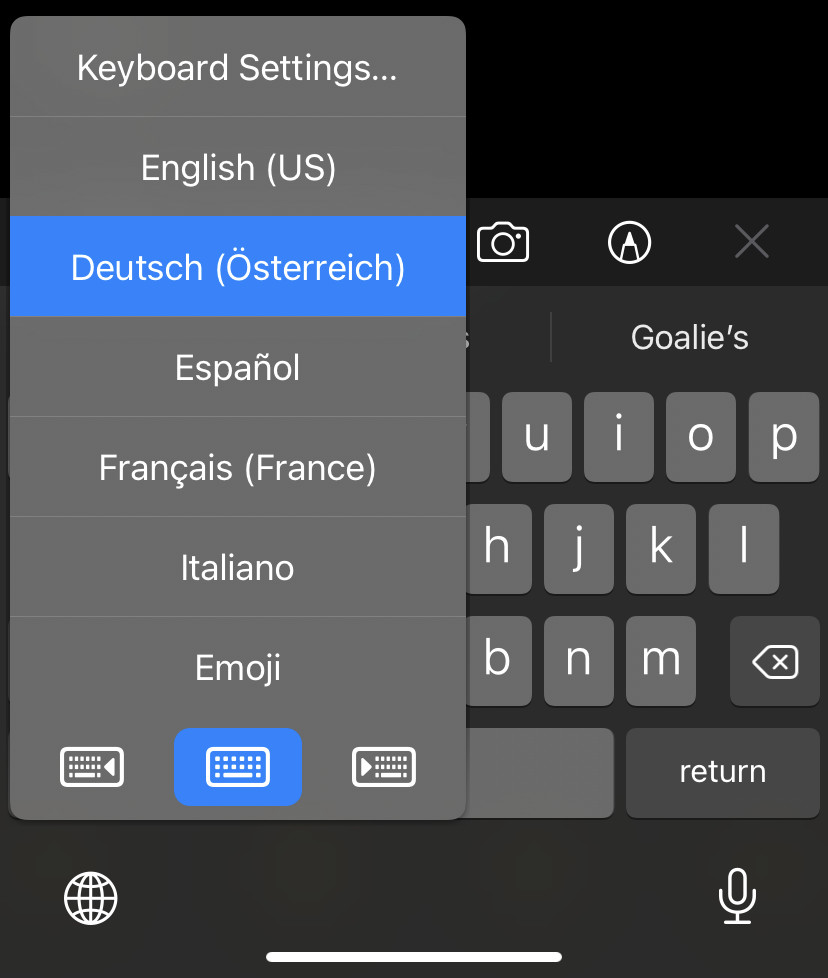
Things flowing smoothly now?
Tips help fuel these email and tech how-tos.
How to Add a Language or Keyboard Layout to the iPhone Keyboard
To edit the list of languages (and keyboard layouts or input methods) available for the iPhone keyboard:
- Open the Settings app on the iPhone.
- Now open the General category.
- Go to Keyboard.
- Now choose Keyboards.
- Click Add New Keyboard….
- Tap a language or language variant to add it to your iPhone keyboards.
Search: Use the Search field to find desired keyboards, of course; you can search by language name and country name (if there is a language variant for that country), both in your iPhone display language (not the language itself). - Choose between adding a separate keyboard or create a multilingual keyboard.
Bilingual: Select Add to Existing Keyboard and pick the keyboard you want to turn multilingual.
Separate: Choose Add New Keyboard to add a monolingual keyboard for the language.
Choose a Different Keyboard Layout for a Language
To pick a different keyboard layout (such as QWERTY or AZERTY) for a language’s iPhone keyboard:
- Select the language in the iPhone Keyboards settings (see above).
- Now choose the desired keyboard layout.
Remove a Language from the iPhone Keyboard
To delete a language from the list of input languages for the iPhone keyboard:
- Open the Settings app.
- Go to General.
- Choose Keyboard.
- Now open Keyboards.
- Swipe to the left over the language you want to remove.
- Select Delete.
Looking to change the interface language? How to Change the Language on iPhone and iPad
How to Change the Input Language on the iPhone Keyboard: FAQ
Can I have two different keyboard layouts for the same language?
No, not normally.
You can only choose one keyboard layout per language for the iPhone keyboard. If a language has multiple (similar) variants, you can add the variants and choose different layouts, though (e.g., Austrian and German German).
Can I change the order of languages in the language picker?
Yes.
To change the order in which languages appear for the iPhone keyboard:
- Open Settings on the iPhone.
- Go to General | Keyboard | Keyboards.
- Now tap Edit.
- Use the handles to the right of each language to move them up or down the list.
- Tap Done.
Do multilingual keyboards auto-suggest and auto-correct in all added languages?
Yes.
You can combine languages freely. Multilingual keyboards let you type in all of the added languages and mix them within a sentence, fully supporting auto-completion and auto-correction.
How many languages can I add to a single keyboard?
You can use two languages with a single keyboard or three if two of them are Indian. Not all languages support bi- or trilingual keyboards, though.
Their word: Apple include information on multilingual keyboards in a support article.
(Tested with iOS 15–18 and 26; first published July 2022, last updated September 2026)