
Suddenly find you can’t change the volume on macOS? No matter what you press or click, output remains stuck. Find out here how to unlock and change locked volume on a Mac ⤓ (and why it can get stuck in the first place).
Why Volume Gets Locked on a Mac
⚡ Quick Fix
1. Unplug and reconnect headphones.
2. Go to System Settings | Sound, select Built-in Speakers and try adjusting the volume in Sound settings.
3. Restart the coreaudiod process in Activity Monitor.
4. Restart the Mac.
Typically, a Mac’s volume becomes locked when you plug headphones in to or out of the headphone jack.
During plugging, the audio controller switches between internal speakers and headphones. Each has its own volume associated (and saved) with it, and during the change volume is locked. As it looks (and much of this is speculation), the interplay of physical connector and software can get stuck in that in-between state sometimes.
How to Fix Locked Sound Volume on a Mac
Time needed: 2 minutes
To change a Mac's locked volume (and possibly unlock the volume):
- Unplug your headphones and plug them back in.
Vice versa: If plugging out headphones caused the issue, reconnect them and then unplug them again.

- If that failed, make sure output is set to built-in speakers.
Here’s how: Open System Settings, go to the Sound category, pick the Output tab and select speakers of type Built-in.
Why it works: HDMI, Bluetooth output and other external audio devices can take over volume control.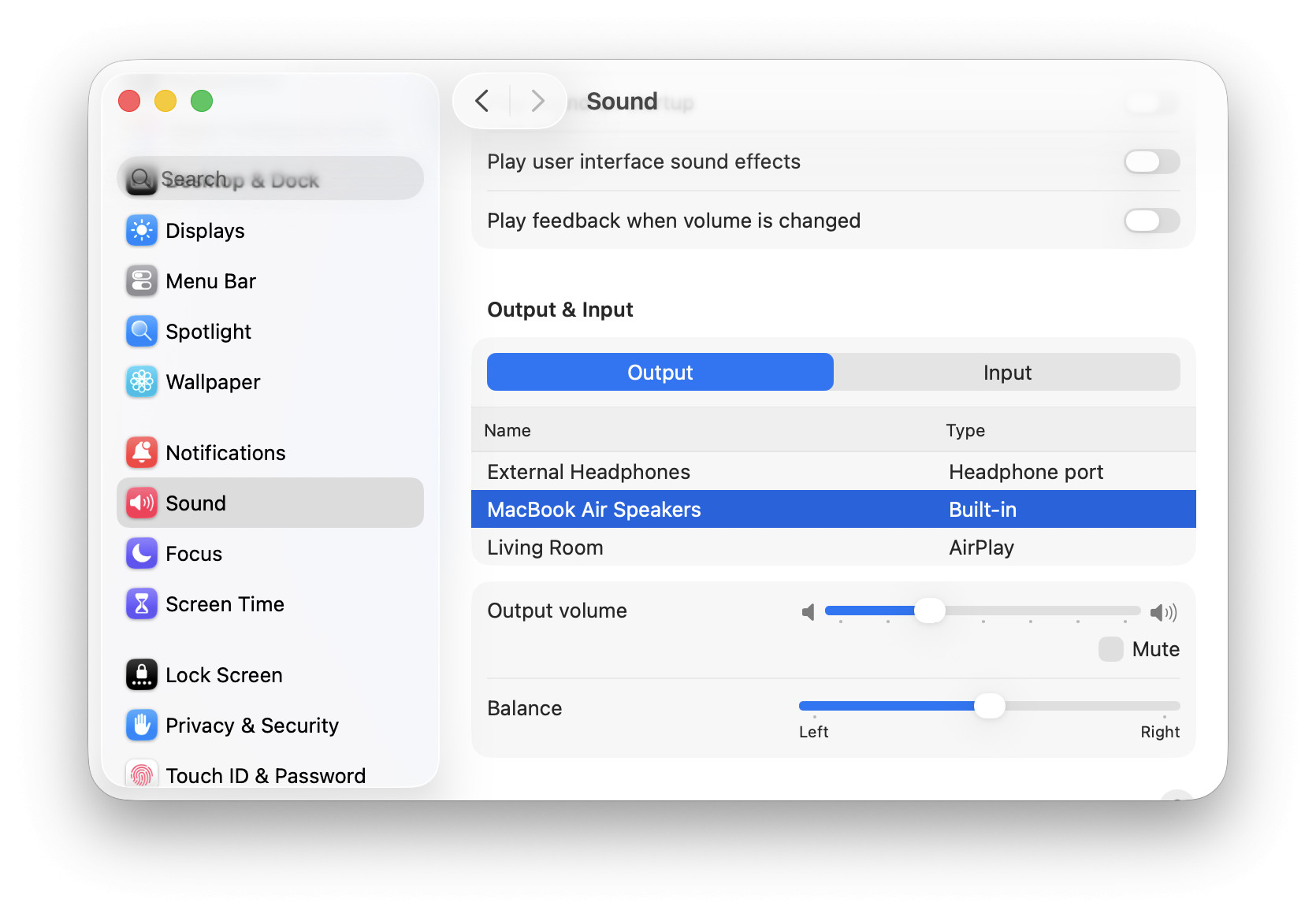
- If that failed, try changing volume in System Settings under Sound.
Here’s how: Open System Settings to the Sound category and go to Output; see above
Why: Even if this does not unlock the volume for the keyboard, you may be able to at least turn down a locked volume.
More options: If built-in speakers won’t respond, try switching to a different audio output, say an Apple TV. - If that failed, force quit the coreaudiod process.
It will restart: macOS will automatically reset and restart the process.
Why it works: Coreaudiod is the process that manages audio output on a Mac; like any piece of software, it can run into issues.
How to do it: Find and quit the coreaudiod process in Activity Monitor or runsudo killall -9 coreaudiodin Terminal.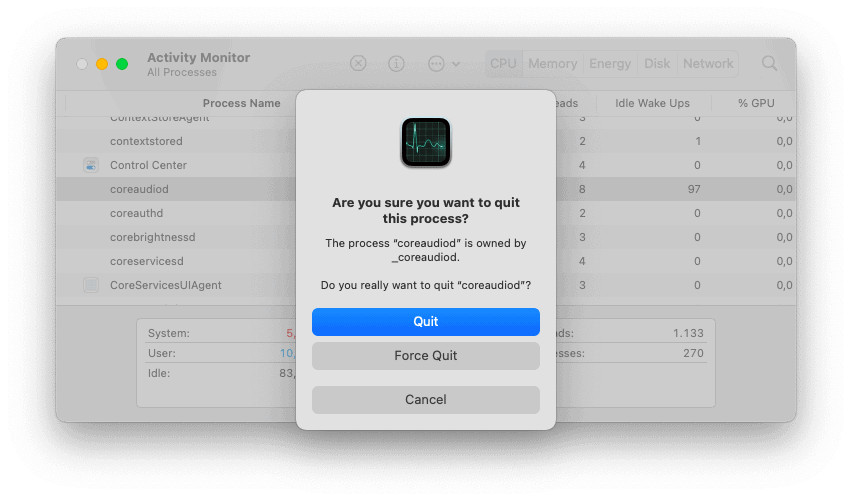
- If that failed, do restart your Mac.
Now, do change the volume on your Mac (also in small increments) as usual.
VOLUME back to normal?
Tips help fuel these email and tech how-tos.
(Tested with macOS Tahoe 26.0–26.5, Sequoia 15.1–15.6, Ventura 13.4 and Big Sur 11.3; first published May 2021, last updated July 2026)